Findio: GPS phone tracker
- 4.1
- Rating
- 1.00M
- Installs
- Free
- Price

 Analysis by App-foxy
Keeping track of family members can be useful, but the experience depends on more than simply seeing a dot on a map. A location app needs to feel understandable, reasonably responsive, and easy enough to use when you are already busy. I spent time looking at Eyezy as a parenting app with live location sharing, and my overall impression is that it is aimed at families who want a single place to stay connected rather than a complicated monitoring system.
Eyezy is free to install, developed by Fortunex Limited, and available for Everyone. It has passed the one-million-install mark and holds a 4.2 average from around 3.3 thousand ratings. Those figures suggest that it has reached a sizeable audience, while the smaller body of written feedback—around 320 reviews—also reminds me not to treat the rating as a complete picture of every family’s experience.
The app’s central purpose is straightforward: sharing live location with friends and family. In practice, that means its value is tied to how quickly location information becomes useful, how clearly the app communicates what is happening, and how well it fits the devices your household already uses. I would not choose it purely because it has a familiar map-based concept. I would choose it when shared location is the specific problem I want to solve.
You May Also Like

 Blood Strike: 2.5 Anniversary
Blood Strike’s Loadouts Turn Every Drop Into a Tactical Gamble
A close look at Blood Strike’s custom loadouts: how fast access to signature weapons reshapes its battle royale rhythm, rewards preparation, and narrows the gap between fights.

 Pandora - Music & Podcasts
Pandora’s Music Is Easy to Start, but Harder to Recover
Pandora’s strength is its low-effort path from a seed to a station. Its weak spot is how much confidence it asks you to place in connection, setup, and quiet recovery.

 8 Ball Pool
 Is Built on Rivalries, Rematches, and Routine
A close look at the rivalries, rematches, shared routines, and unanswered safety questions that turn a quick pool match into a persistent mobile community.

 Samsung Music
’s Quiet Strength Is Playing What You Already Own
Its reach comes less from spectacle than from dependable access to a personal library. That simplicity is both the app’s strongest retention engine and its ceiling.

 AccuWeather: Weather Radar
AccuWeather Review: A Quick, Clear Forecast for Everyday Decisions
For everyday plans, the best forecast is the one you can understand quickly. AccuWeather makes rain timing, radar, and local conditions easy to act on, with a few trade-offs.

 Hill Climb Racing
Why Hill Climb Racing Still Turns Crashes Into One More Run
A tiny car, a bumpy hill and one more upgrade: Hill Climb Racing keeps resurfacing because its simple chaos makes every near-miss feel personal.
More From Our News Desk



How Eyezy feels during everyday location checks
My first expectation with an app like this is not instant perfection; it is predictable behavior. When I open a family location tool, I want to understand whether I am looking at a recent position, an updating position, or an older one. That distinction matters more than flashy presentation. A map that looks polished but leaves me guessing about freshness is not particularly helpful when I am checking whether someone has arrived.
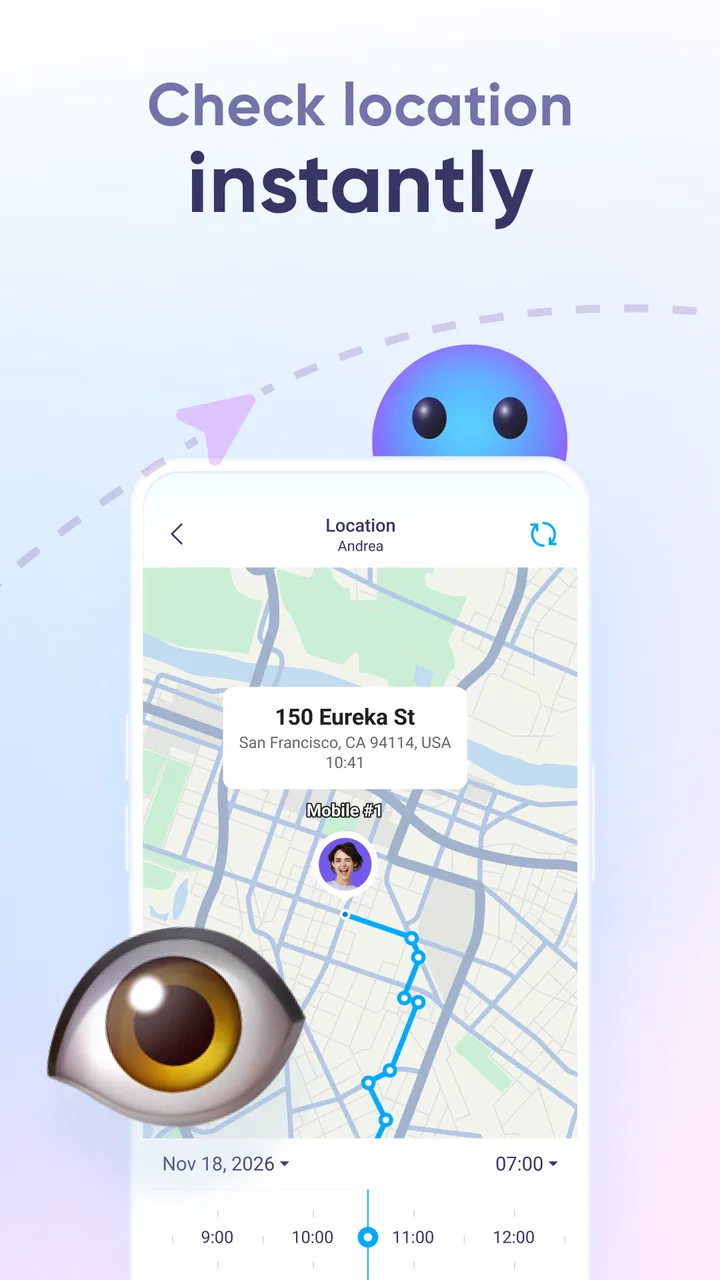
Eyezy’s live-location focus makes it more practical than a basic “I am here” message. Instead of asking someone to send a new pin every time plans change, the family can use a shared view for routine situations. That is useful for a parent waiting for a child after school, relatives coordinating a meeting point, or friends trying to find one another without a long chain of calls and messages.
I would still keep expectations sensible. Live location is not the same thing as a continuous, perfectly precise account of movement. Phones can be indoors, carried in a bag, temporarily disconnected, or affected by the way the device manages background activity. For that reason, I see the app as a convenience and communication aid, not as a substitute for calling someone when there is an urgent concern.
One practical habit makes the experience clearer: agree with family members on what a location check means before relying on it. If a parent assumes that a stationary marker means a child is safely inside a building, that assumption may be too strong. A better routine is to use the shared location to answer simple questions—“Have they reached the area?” or “Which meeting point are they near?”—and use direct contact for anything important or time-sensitive.
The app is particularly appealing when everyone wants less friction. A normal messaging app can share a location, but that usually requires a person to remember to send it and to repeat the action when plans change. Eyezy’s family-oriented approach is more suitable for recurring coordination. The trade-off is that every person involved needs to be comfortable with the arrangement, because location sharing is meaningful only when it is transparent and mutually understood.
What happens when the app is under heavier use
The most demanding moments are likely to be the ones when several people are checking locations around the same time: school pickup, a crowded event, a family trip, or a change of plans while someone is already travelling. In those situations, I would judge Eyezy less by whether it feels entertainingly fast and more by whether it helps me make a decision without confusion.
A good workflow is to check the map before calling, use the visible position to narrow down where someone may be, and then contact them if the situation still needs clarification. That prevents the common mistake of repeatedly refreshing an app while ignoring the fact that a location display can never explain every circumstance. Eyezy can reduce unnecessary calls, but it cannot remove the need for ordinary communication.
There is also a resource trade-off to consider. Location-related apps naturally depend on the phone being able to provide location information and communicate it. If a device is already struggling with low battery, limited connectivity, or aggressive background restrictions, the experience may become less dependable. I would not describe that as a unique flaw in this app; it is a practical limitation of the category. Still, it is important because families may notice it precisely when they need the app most.
My advice is to test the household routine during a calm week rather than waiting for a busy day. Have each person use the app in the places where it will matter: at home, on the way to school, near a workplace, or during a normal outing. That test can reveal whether the family understands the interface and whether the chosen devices behave consistently. It is a more useful preparation step than assuming that installation alone guarantees smooth tracking.
Another non-obvious point is that shared location can create too many checks if the family does not set boundaries. A parent may begin opening the app repeatedly, while a child may feel watched even during ordinary activities. I think Eyezy works best when the household agrees on reasonable use—for example, checking around expected arrival times rather than treating the map as a constant conversation. That approach protects trust and makes the app feel supportive instead of intrusive.
Stability, interruptions, and recovery
Reliability in a parenting location app is not only about whether it opens. It is also about how understandable the app is after an interruption. Phones move between Wi-Fi and mobile networks, screens are locked, and people close apps without thinking. When I return to a location tool, I want the current view to be easy to interpret rather than forcing me to remember what I saw earlier.
Eyezy’s usefulness therefore depends on a simple recovery mindset. If the location view does not immediately answer the question, I would first check whether the person has recently communicated, whether their phone is reachable, and whether the situation actually requires a call. I would avoid treating a delayed or unchanged position as proof that something is wrong. This is an important distinction for anxious parents: a location app can provide context, but it should not encourage panic over every pause.
The app’s broad audience is another advantage here. With more than a million installs, it is not an obscure experiment that only a handful of people have tried. That does not guarantee perfect stability on every phone, but it does make the product easier to consider as a mainstream option. The 4.2 average also points to a generally positive reception, though individual experiences can differ depending on device setup and family expectations.
I would pay close attention to how the app behaves after a phone restart, a long period with the screen off, or a change in network. Those are realistic situations, and they matter more than a quick demonstration while the app is open. If a household relies on location sharing, a short trial should include these ordinary interruptions. The goal is not to chase a perfect technical result; it is to learn whether the app’s behavior is predictable enough for your routine.
Recovery also includes the human side. If a child’s phone is unavailable, a parent should have another agreed method of contact and a clear plan for missed check-ins. Eyezy can sit inside that plan, but it should not be the entire plan. I consider this one of the most important limitations of any location tracker, and it is especially relevant when adults are tempted to use the map as reassurance rather than as one source of information.
Device limits and the cost of convenience
Eyezy supports devices running Android 8.0 or later, which gives it a reasonable compatibility range for many users. Still, an operating-system requirement is only the starting point. A phone can meet that requirement and still offer a different experience because of battery-saving behavior, available storage, network quality, or manufacturer-specific background controls.
If you are setting it up for a child, I would avoid doing so moments before leaving the house. Install it in advance, check the account and sharing arrangement, and make sure everyone understands whose location is visible. This setup is also a good time to discuss privacy. The app is for family and friend location sharing, but the fact that it is technically possible to share a location does not automatically make every sharing arrangement appropriate.
Resource demands are another reason to watch the first few days rather than guessing. A location-focused app may be more noticeable on a phone that is already old or heavily used. I would look at whether the child’s device still has enough battery for the rest of the day and whether the app fits alongside school, communication, and emergency needs. If battery life is already a serious problem, a dedicated location app may not be the best answer without changing the broader phone routine.
The current version is 1.10.0, and the app is free to download. There are in-app purchases ranging from $2.99 to $99.99 per item, so I would review the purchase screens carefully before committing to anything beyond the basic installation. The free entry point is helpful for testing the concept, but families should decide what they actually need before paying. A location-sharing tool is not automatically better simply because it offers more options behind a purchase.
This pricing structure also affects who should skip Eyezy. If you only need an occasional location pin, a normal messaging app may be simpler and cheaper because it does not introduce another dedicated service into the family routine. If you want recurring visibility among several people and prefer a purpose-built parenting app, Eyezy makes more sense. The right choice depends on whether the convenience of a shared location workflow is worth the extra setup and possible spending.
Where it fits beside familiar alternatives
The usual alternatives fall into two groups. The first is ordinary messaging, where someone sends a one-time location when asked. That method is excellent for a single meeting and keeps control in the sender’s hands, but it becomes repetitive for school runs or regular travel. Eyezy is more suitable when the same people need location context repeatedly.
The second group is built-in family location tools that may already exist on a household’s phones. Those options can be appealing because they are familiar and may require fewer separate accounts or apps. I would choose one of those when the family values the smallest possible setup and everyone already uses the same device ecosystem. Eyezy becomes more interesting when a dedicated parenting interface and a focused family-location experience are more important than keeping everything inside existing phone services.
There is no universal winner. A family with older devices, mixed habits, or a strong preference for one-time sharing may find messaging easier. A family coordinating several daily routines may appreciate Eyezy’s dedicated purpose. My practical test would be simple: count how often you currently ask “Where are you?” and how often the answer requires another message. If that exchange happens regularly, a shared location app has a clearer reason to exist.
I also would not compare Eyezy with emergency services or professional safety systems. Its role is everyday family coordination. That makes it useful for ordinary uncertainty—being near the pickup area, finding relatives at an event, or checking whether someone is approaching home—but it is not a replacement for emergency contact procedures, responsible supervision, or a direct conversation.
Who will benefit and who should think twice
I can recommend Eyezy to parents who want a straightforward way to share locations with family members and who are willing to establish clear expectations. It is also a reasonable fit for relatives who meet often, families with changing travel plans, and groups that want fewer repetitive “send me your location” requests.
I would be more cautious if the intended user is uncomfortable with location sharing, if the phone has severe battery or connectivity problems, or if the family expects the app to provide certainty in every situation. The product cannot remove the limitations of the device or the network, and it cannot interpret why a person is in a particular place. Those are not small details; they define how safely the app should be used.
For younger users, the best experience will come from an open agreement rather than secret monitoring. Explain what is shared, who can see it, and when the family expects people to respond. That conversation may feel less technical, but it determines whether the app builds confidence or creates tension. In my view, a location tool is most valuable when it supports trust instead of trying to replace it.
My performance verdict after weighing the trade-offs
Eyezy is a focused parenting app with a clear everyday purpose. Its strongest idea is not simply displaying a map; it is reducing the repeated coordination work involved in keeping family members informed. The free download makes it easy to explore, while the Everyone rating and Android 8.0 minimum make it accessible to a broad range of households. Fortunex Limited has positioned it for people who want family and friend location sharing in a dedicated app.
My view of speed and stability is appropriately practical: it should be judged during real routines, not just during a quick opening test. Network changes, locked screens, battery-saving behavior, and older phones can all affect location experiences. I would use Eyezy as a helpful layer of context, confirm important situations directly, and test it across the devices that matter before depending on it.
The purchase range—from $2.99 to $99.99 per item—means I would approach upgrades carefully. Try the basic experience, identify the exact problem you want solved, and avoid paying for options that do not improve your family’s routine. If one-time location sharing already works well through messages, Eyezy may feel unnecessary. If recurring family coordination is the problem, it has a more convincing role.
Overall, I see Eyezy as a useful choice for families who want convenience without pretending that technology can replace judgment. Use it as a shared reference point, not as an unquestionable record of someone’s safety. With that expectation, clear privacy boundaries, and a little testing on the actual phones in your household, it can become a sensible part of everyday family planning.
FAQs for Findio: GPS phone tracker
01What is Eyezy and how does it work?
Eyezy is a GPS phone tracker app designed to help users monitor the location and activities of a target device. It works by installing the app on the target device, which then allows real-time tracking of its location and access to various features such as call logs, messages, and app usage. This app is often used by parents to keep an eye on their children's whereabouts.
02Is Eyezy legal to use?
The legality of using Eyezy depends on how you use it. It is legal to use the app for monitoring your own devices or those for which you have explicit consent. However, using it to track someone’s phone without their knowledge or consent may violate privacy laws. Always ensure you comply with local regulations before using Eyezy.
03What features does Eyezy offer?
Eyezy offers a variety of features including real-time GPS location tracking, access to call logs, text messages, social media monitoring, and app usage. It also provides geofencing alerts, which notify you if the target device enters or exits certain areas. These features make it a comprehensive tool for monitoring a device’s activity.
04How do I install Eyezy on a target device?
To install Eyezy, you need physical access to the target device initially. You’ll download and install the app directly onto the device. After installation, you can manage and monitor the device remotely through the Eyezy dashboard. The process is straightforward, but it’s crucial to follow the installation instructions provided by the app to ensure proper setup.
05What are the system requirements for Eyezy?
Eyezy is compatible with both Android and iOS devices. For Android, it typically requires version 4.0 or higher, while for iOS, it generally supports devices running iOS 7.0 or later. Ensure that the target device meets these requirements for optimal performance. Additionally, an internet connection is necessary for real-time tracking and updates.
Pros
- User-friendly interface for easy navigation.
- Realtime location tracking is highly accurate.
- Geofencing alerts are customizable.
- Supports multiple devices simultaneously.
- Battery consumption is minimal.
Cons
- Requires internet connection for tracking.
- Limited features in the free version.
- May raise privacy concerns for some.
- Setup can be complex for novices.
- Not compatible with older OS versions.

Findio: GPS phone tracker
Gallery